The White-breasted Waterhen (Amaurornis phoenicurus).
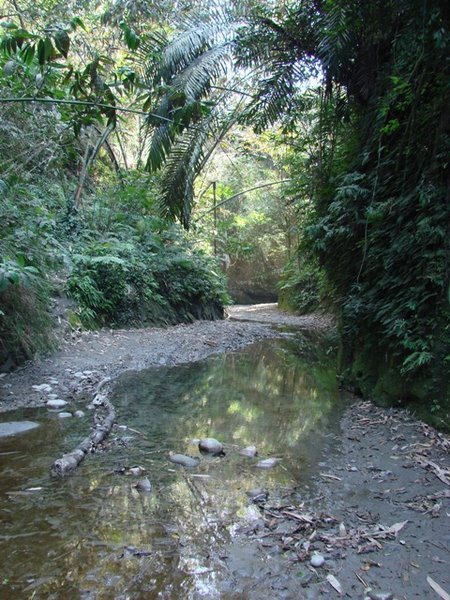
The White-breasted Waterhen Amaurornis phoenicurus is a fairly common waterbird frequenting the reed beds and undergrowth along streams in the area. At dawn and dusk one can often observe them feeding along the edges of the stream and on sand bars in the stream which runs through Huben village.
Huben Bird List
Tuesday, September 29, 2009
White-breasted Waterhen

Monday, September 14, 2009
The proof of the pudding is in the eating: The Chingshuei River after Morakot
One of the major criticisms and concerns over the Hushan Dam project is that the dam will just silt up and become unusable within a very short period. After the devastating earthquake in September 1999 the general area remains highly unstable. Obviously there is a major safety concern with a large dam being constructed in an unstable area that is within an area with an alarming history of earthquakes. If the dam wall fails a lot of people will be in very big trouble.
Lets put aside the safety concerns for a moment and lets just look at the silt issue. It is a known fact that after the big 921 Earthquake in September 1999 large amounts of debris and silt were deposited in the middle and lower reaches of the the Chingshuei River. Silt, large boulders and other flood debris are frequently deposited in the mid and lower reaches after typhoons. Taiwan is usually struck by several typhoons (three to five typhoons on average) each summer. A large lake has formed on the Chingshuei River in the Tsaoling area five times over the past century as a result of debris from earthquakes, typhoons or landslides blocking the channel of the river. The most recent was as a result of the big 1999 earthquake. This lake rapidly silted up and what was left was destroyed by a typhoon in 2005 which resulted in large amounts of silt and flood debris being deposited further downstream. The Jiji weir on the Jhoushuei River within the same area suffers from a major silt problem.
The catchment area for the Chingshuei River is geologically highly unstable as a result of the big 921 Earthquake. With the impact of Typhoon Morakot the area has one again suffered extensive damage. Mountainsides are exposed and scared by landslides and as typhoons hit the area over the next few years it is a certainty that many exposed slopes will come crashing down into the Chingshuei River. Route 149, which largely follows the course of the Chingshuei River has been destroyed. Numerous bridges along the route have been washed away and damaged. Whole sections of the road have been washed away or covered by landslides and flood debris. It will take years to repair the damage. It should be noted that parts of this route were still being repaired as recently as 2006 following the 921 Earthquake.
The big question is why with all this proof are we still trying to build the Hushan Dam? How much proof do we still need before we admit Hushan Dam is an idiotic idea? The forces of nature through earthquakes and typhoons keep reminding us what they do to the Chingshuei River. The government's own Environmental Protection Administration's Environmental Impact Assessment Committee ruled the construction of Hushan Dam illegal. Developers have said the ruling was non-binding and just forged ahead with the project with the backing of the authorities. The fact that the issue still lies before the courts and the courts have yet to rule on the legality of the project have just been brushed aside. The only people that stand to benefit from the construction of the Hushan Dam are the developers. For the people of Taiwan they are undoubtedly funding a highly dangerous and costly white elephant with their tax dollars and stand to gain nothing except more expenses in repairing the damage that the Hushan Dam has and will cause to Taiwan's natural environment.
A series of photos showing some of the devastation to the Chingshuei River valley and Route 149 just upstream of the village of Tsaoling.  Road to nowhere, Route 149 is blocked off upstream of Tsaoling village. It should be noted that Route 149 is washed away before it reaches Tsaoling and the village can only be reached by taking a detour via Shihpi.
 The Chingshuei River valley. The entire side of a mountain has come down. Other landslide scars are clearly visible on the mountainsides. The remains of a suspension bridge and a road bridge are clearly visible in the background.
 The Chingshuei River snakes its way through flood and landslide debris.
 Another shot of the debris and silt-filled Chingshuei River valley.
 A wrecked car amongst the Chingshuei River flood debris.
 A wrecked car buried in the debris of a landslide. Rescuers dug down to expose the car to check if it contained human remains. Hundreds are still missing after Typhoon Morakot devastated central and southern Taiwan last month.
 A wrecked car in the Chingshuei River flood debris.

 Three photos showing part of a small village buried up to roof height by flood and landslide debris.


 Seven photos of dwellings and buildings covered by flood and landslide debris.
 Route 149 washed away and covered by a landslide is now marked by just a track carved through the debris so rescue vehicles could be brought in.
 One of the many places where bridges have been washed away. A landslide scar is clearly visible on the hillside.
 Part of bridge lies amongst the flood debris. A truck involved in the relief effort travels along the track carved through the debris. A landslide is clearly visible on the mountainside of the far bank.
 Yellow tape marking the entrance to another damaged bridge.
 End of the road. Two photos showing a damaged bridge. Buildings on the far bank have been destroyed. A landslide is clearly visible in the top left of the second photo.
Also see:
Typhoon Morakot: The Writing's on the Wall
Air quality worsens from Typhoon Morakot's dust
Taiwan's Aborigines Suffer More Than Morakot
Tuesday, September 8, 2009
The Pheasant-tailed Jacana - more than a typhoon victim.
 Pheasant-tailed Jacanas (Hydrophasianus chirurgus) in a water chestnut pond, Kwantien, Tainan.
One of the reserves devastated by Typhoon Morakot was the Guantian Jacana Reserve in Tainan County. The reserve is a protected area for the threatened Pheasant-tailed Jacana Hydrophasianus chirurgus, a dazzling water bird that moves about elegantly on floating vegitation. Jacanas are often called lilly-trotters. The typhoon struck right in the middle of the jacana breeding season. Nests were wiped out and many jacanas seemed to have disappeared. According to the Taipei Times many birds have returned and some renewed nesting attempts are taking place. We heard about the devastation of the Jacana reserve the day after the typhoon. I was at the reserve just a few weeks before and snapped this shot of a pair of jacana. They were feeding in a water chestnut pond about a kilometer away from the reserve.
The jacana reserve does provide nesting for about fifty pairs of jacana. This is obviously very good but in reality it isn't nearly enough. With no available territories available within the reserve the young have to disperse outside the reserve area. But sadly there is no suitable habitat left for them to establish a territory and breed beyond the reserve so they are faced with a perilous nomadic existence with no breeding. It has been shown that jacana and water chestnut farmers can get along if they want to. The govt just doesn't provide any incentive, motivation or requirement that they do so the jacanas always come off second best.
In reality this reserve can't save the species on Taiwan. Much more needs to be done. We can't take a species and relegate it to just 15 ha of habitat and expect it to just make do there. Is 15 ha all the space we can find in a hearts to give this struggling species? Two hundred birds is all that lies between this species on Taiwan and its extinction. All it takes is a botulinum toxin or outbreak of some avian disease and this highly localised species confined to a single population will be expatriated forever.
If I recall the Taiwan High Speed Rail had to fork out just two million NT$ when the line was built over the species stronghold at Hulupi (Tainan). Two million NT$ can't even buy a house. Yet this pittance is the kind of price we're putting on the heads of this once abundant species that is now down to about just two hundred members on Taiwan. This sadly is what conservation on Taiwan is all about. A little reserve here, a little reserve there and we humans take the rest...
Monday, September 7, 2009
Air quality worsens from Typhoon Morakot's dust
 Wuchi Power Plant through the haze. Wuchi Power Plant at Taichung Harbour named the world's dirtiest coal-fired power plant by the prestigious science journal, Nature.
 Dried sediment like this on the Jhoushuei River results in large quantities of fine dust.
 The dusty floodplain at the confluence of the Jhoushuei and Chingshuei Rivers on the border of Nantou, Changhua and Yunlin Counties. The hills of Huben are clearly visible in the background.
The air quality in central Taiwan has always been a problem. The world's dirtiest coal-fired power plant in Wuchi, Taichung does its bit in greying central skies. Then, the Formosa Plastics plant at Mailiao and various other industrial parks all add to the toxic clouds. Add to that the burning of rice fields, garbage, ghost money and the exhausts of millions of scooters, cars and trucks and you have really scary air. But it doesn't stop there. You need to add dust, too. The lower courses of Taiwan's rivers tend to have very wide floodplains. This is due to the volume of water within rivers increasing dramatically during typhoons. With the building of dams and weirs on large rivers like the Jhoushuei and Chingshuei the greatly reduced flow of water causes the wide river floodplains to really dry out and dust becomes a major problem as a result...and when the Hushan Dam is completed it will only add to the problem. And this dust really helps push down the air quality index when in gets in the mix with all the other pollutants blowing around. Understandably its just got worse in the wake of Typhoon Morakot...much of the destruction and mud resulting from decades of poor land and water management.
See:
Air quality worsens from Typhoon Morakot's dust in the Taipei Times.
Typhoon Morakot: The Writing's on the Wall
River Dust
Friday, September 4, 2009
Ideologically Based Development: What’s the Point of Environmental Impact Assessment?
 Wild at Heart Legal Defense Association's founding director standing in the haze in front of the world's dirtiest coal-fired powerplant in Wuchi, Taichung.
A recent article on the Wild at Heart Legal Defense Association website titled Ideologically Based Development: What’s the Point of Environmental Impact Assessment? gives some valuable insight into the failings of environmental impact assessment in Taiwan and the type of mindset environmental groups come up against when dealing with the government department appointed to protect Taiwan's environment. Wild’s founding director, Robin Winkler, served a two-year term on the EIA commission.
Thursday, August 27, 2009
New Butterfly Photo Added to the Huben-Hushan Butterfly Gallery

A photo of a Common Albatross Appias albina semperi has been added to the Huben-Hushan Butterfly Gallery.
The Common Albatross is a lowland species found from sea level to about 800m. It occurs in forests and often flies rapidly through the canopy. The photo is of a male. Males are mainly white with pointed fore-wings. The underside can appear yellowish. The females have black margins and rounded apexes on their wings. They often show some yellow particularly around the basal of the fore-wing. Wingspan 50-60mm. Common Albatross are usually seen in the Huben-Hushan area between May and October.
Monday, August 17, 2009
Crested Goshawk & Crested Serpent Eagle


 Three photos of the Crested Goshawk, a common resident of the Huben-Hushan area.
The Crested Goshawk Accipiter trivirgatus is a common resident raptor in the Huben-Hushan area. The Crested Goshawk is widespread across south and Southeast Asia but race formosae is endemic to Taiwan only. The Crested Goshawk along with the Crested Serpent Eagle Spilornis cheela are the two most common resident raptors found in the area. 
 Two photos of the Crested Serpent Eagle, also a common resident of the Huben-Hushan area.
Huben Bird List
Friday, August 14, 2009
Typhoon Morakot: The Writing's on the Wall

 A huge landslide in the mountains of Kaohsiung County in southern Taiwan.
 A government rescue helicopter flying through the the clear early morning skies before the afternoon rain and mist roll in.
As the fog of incapacitating shock clears, many people in central and southern Taiwan are becoming angry. Both of Taiwan's leading English newspapers carry criticisms of the government's top leadership in their editorials. The Taipei Times editorial is titled The price of incompetent leadership and the Taiwan News editorial is named Morakot's harm to Taiwan worsened by KMT hubris. None but the most mindless Chinese National Party (KMT or Kuomintang) supporter couldn't help but be angered by President Ma Ying-jeou's pathetic display of leadership during this national tragedy.
As the President and his men point fingers, it is everyone else but them to blame for how the response to Morakot and its aftermath have been mismanaged. Even the authoritarian and aloof leadership in China managed a better performance in the wake of last summer's devastating Sichuan earthquake.
Despite the lack of presidential leadership through this horrendous week the true spirit of compassion and love has shined through as a light above the devastation below, as people; be they rescuers, conscripted soldiers, volunteers or just a stranger offering a hand; have given their all through the mist, rain and mud, along treacherous slopes and through raging waters to save and bring comfort and hope...and lead the nation through this devastating tragedy.
It is also a time to reflect. We need to ask how much of this tragedy has resulted from decades of poor land and water management policies that set up some regions as ticking time bombs? As forests were stripped away leaving nothing to bind the soils and rocks of mountainsides together and uncontrolled and irresponsible construction became a standard, it turned many mountain areas into a tragedy waiting to happen. It is time to take a long hard look at land and water management policies and put an end to short-term "make-a-quick-buck while tearing up the countryside" type of policies and replace them with real sustainable land and water management policies that don't cost lives and billions of dollars in repairs when big typhoons blow in.
See today's Taiwan News editorial titled Taiwan must heed Morakot`s warning for more reflection on Taiwan's land and water management policies.
Also see:
The proof of the pudding is in the eating: The Chingshuei River after Morakot (includes photos).
Air quality worsens from Typhoon Morakot's dust
Tuesday, August 11, 2009
In Morakot's Wake

Typhoon Morakot has carved a path of destruction across the Philippines, Taiwan and China. Our thoughts and prayers are with all the victims of this tragedy, human and non-human alike. We wish strength to those who have watched their homes, villages and environment swept away. We pray for the safety of those involved in the rescue efforts as they make their way to Hsiaolin and other devastated villages.
Also see: Typhoon Morakot: The Writing's on the Wall
Wednesday, August 5, 2009
New Butterfly Photo Added to the Huben-Hushan Butterfly Gallery

A photo of a Double-branded Crow Euploea sylvester swinhoei has been added to the Huben-Hushan Butterfly Gallery.
Friday, July 31, 2009
Taiwan Bamboo Partridge
 Taiwan Bamboo Partridge (Bambusicola thoracicus sonorivox) is a common Huben-Hushan resident.
The Taiwan Bamboo Partridge Bambusicola thoracicus sonorivoxis a common resident of the Huben-Hushan area. The Taiwan Bamboo Partridge is the endemic Taiwan subspecies of the Chinese Bamboo Partridge Bambusicola thoracicus. Many researchers believe that race sonorivox is likely a full species.
Huben Bird List
Monday, July 20, 2009
Himalayan Black Bulbul

The Himalayan Black Bulbul Hypsipetes leucocephalus is a fairly common resident of the Huben-Hushan area. Race nigerrimus is endemic to Taiwan. This bird with bright red feet and bill can be seen along the trails and in village gardens.
Huben Bird List
Sunday, July 19, 2009
New Butterfly Photos added to our Butterfly Gallery
 Himalayan Jester Symbrenthia hypselis scatinia
Photos of several new butterflies have been added to the Huben-Hushan Butterfly Gallery.
Tomb Raptor

Sunday July 12th saw the premiere of the film Tomb Raptor on National Geographic Channel Taiwan. Tomb Raptor is a documentary about the migratory Grey-faced Buzzard. It is the fourth program in National Geographic Channel's four program series Taiwan to the World 3. Taiwan to the World aims to bring the wonders and diversity of Taiwan to the world. It is in its 3rd season and will be shown on National Geographic Channel internationally in 164 countries.
Much of Tomb Raptor was filmed in the Bagua Mountain area which is a critically important area for migrant raptors on the East Asian Oceanic Flyway. The southern end of Bagua Mountain lies directly across the the Chingshui River valley from the Huben-Hushan area and is another reason why the greater Bagua Mountain-Huben/Hushan area is so critically important to birds and needs to be protected.
Sunday, June 28, 2009
Conference for Birdwatching Tourism in Taiwan
Birdwatching tourism and other forms of ecotourism offer many people in rural communities such as Huben and Hushan a means of employment and an incentive to conserve the natural resources in and around their communities. The recent Conference for Birdwatching Tourism in Taiwan aimed to help develop birdwatching tourism in Taiwan. 
The first Conference for Birdwatching Tourism in Taiwan was held in Taipei from 5th - 7th June 2009. The conference was organised and hosted by the Chinese Wild Bird Federation. The conference was aimed at developing birdwatching tourism in Taiwan and several international speakers delivered presentations on birdwatching tourism tourism development in their respective countries. International speakers were from the UK, South Africa, Hong Kong, Malaysia, Thailand, the Philippines and Japan. Local tourism and birding experts also delivered presentations. Taiwan Wild at Heart Legal Defense Association's Mark Wilkie spoke on the Potential for Birdwatching Tourism in Taiwan (see abstract below). Mark feels "The conference was really very informative. A tremendous amount of knowledge and information has been shared. This was a very successful first conference and I hope we'll have more of these in the future. Well done to Charles Chen, Victor Yu and all the folks at the Chinese Wild Bird Federation for putting this together." Mark is a Taiwan-based conservationist and birder. He speaks and lectures internationally on Taiwan's birds and their conservation. He serves as a moderator on Birdforum the net's largest international online birding community and wrote and co-produced the soon to be screened documentary Tomb Raptor for National Geographic Channel. Tomb Raptor will premiere on National Geographic Channel Taiwan on July 12th before being shown on NGC internationally in 164 countries.  A delegate from Thailand speaks on Thailand's birdwatching tourism experience.
Taiwan’s Birding Tourism Potential
Mark B. Wilkie,
Wild at Heart Legal Defense Association,
12F. 86 Chongcing South Road Section 1,
Taipei,
10045,
Taiwan
Abstract
Thrust upward from the depths of the western Pacific two million years ago, the mountainous island of Taiwan has been described as the Asian Galapagos by some. While the real merits of such a description are open to debate; it cannot be denied that Taiwan is undoubtedly one of the most naturally diverse wonderlands on the planet.
The natural beauty of Taiwan inspired early mariners to name her “Ilha Formosa” or Beautiful Island. Starting with the writings of British naturalist Robert Swinhoe in the early 1860s the small island of Taiwan enjoyed the disproportionate attention of many Victorian and early Edwardian naturalists who were understandably fascinated by her staggering diversity and natural treasures. Journals like the Ibis devoted considerable space to Taiwan’s avian wonders. For sixty years Formosa dazzled Western naturalists with her bounty. Then, as the mists of the imperial political struggles of the day engulfed and isolated her, she was forgotten about.
Starting in the late 60s as a trickle of both foreign and local interest in Taiwan’s birds, a small but steady birding foundation was laid. Interest in Taiwan’s birds has grown considerably over the past decade but Taiwan still has yet to really make its mark on the main Asian birding tour circuit as a must-visit-destination.
With over 560 species having been recorded in and around Taiwan and her offshore islands; BirdLife International and the IUCN recognizing and listing 22 Taiwan endemics, and several rare and threatened migrants all on offer within an area of around just thirty-seven thousand square kilometers; Taiwan is truly a destination of almost unparalleled avian richness.
In this presentation Taiwan’s potential as a major birding destination on the Asian birding circuit will be discussed in the hopes that birding tourism can seen as a possible draw card for tourism and a chance for many local communities, guides and businesses to connect internationally and to develop a sustainable form of tourism and employment.
Tuesday, May 26, 2009
The new assault on Huben
 Former gravel extraction site just outside Huben Village on the road to Hushan.
Once again, more destruction looms on the horizon for Huben and its Fairy Pitta. It has been learned that government, private, and elected officials are advocating development of riparian engineering projects and gravel extraction and working to lift the restrictions on these within the Huben area. The Chinese Wild Bird Federation, Wild at Heart Legal Defense Association, Taiwan Academy of Ecology, & Mercy on the Earth, Taiwan jointly issued a statement yesterday. Wild at Heart Legal Defense Association forwarded the statement to us. We'll be following developments closely and will post updates to keep you up to speed on this very worrying development.
Statement in Support of Government Conservation Policies to Protect Important Habitat for the Fairy Pitta
25 May 2009
In 1999 it was formally verified that the Huben area of Yunlin County is a vitally important breeding area for the Fairy Pitta (Pitta nympha) with the area having the highest nesting density in the world for this rare species. However, the ongoing activities of gravel extraction and the construction of the Hushan Reservoir have resulted in the sharp decline of the Fairy Pitta and many other endangered plant and animal species due to habitat fragmentation and destruction. Another major blow to the wildlife in the area began in 2000 as a result of government policies which resulted in unnecessary engineering projects that included cementing the banks of wild rivers and several other similarly destructive projects. The combination of these factors has pushed this area to the brink of disaster from the perspective of being an important breeding area for the Fairy Pitta.
Responding to these threats, a number of concerned civic groups worked for the drafting of a prohibition on gravel extraction in designated areas that took effect in 2006 to prevent further degradation; in 2007 the sixth session of the Taiwan parliament’s economic and energy affairs committee made a resolution that development projects destroying the environment should be prohibited and in 2008 part of the Huben area (Alishan Forest Region sectors 61-70 totaling 1,737.386 hectares) was formally declared an important wildlife habitat.
However, in May 2009, right at the time when the Fairy Pittas are nesting, it has been learned that government, private, and elected officials are advocating development of riparian engineering projects and gravel extraction and working to lift the restrictions. Environmental groups throughout the country are astounded that there would even be consideration of such a move. Not only has the area come to the attention of the international conservation community, but over 100 domestic conservation groups have strived to obtain formal legal designation of the habitat.
We thus voice our support for and call on the government to firmly abide by its commitments to continue unabated in its efforts to conserve this important habitat of the Fairy Pitta.
Chinese Wild Bird Federation
Charles Cheng, Chairperson
Taiwan Wild at Heart Legal Defense Association
Robin Winkler, Chairperson
Taiwan Academy of Ecology
Chung Ting-mao, Chairperson
Mercy on the Earth, Taiwan
Lee Keng-cheng, Secretary General
支持政府保育措施 維護八色鳥重要棲息環境 聲明稿
2009-05-25
1999年位在雲林湖本地區因為發現有全世界密度最高的稀有八色鳥族群在此繁延和棲息,但在同時間,先後遭遇陸砂開採與湖山水庫開發案,棲地破壞的結果造成八色鳥與其他重要動植物數量銳減與消失,加上2000年以來陸陸續續在棲息地中進行不必要的野溪整治工程,將整個棲息環境的核心區破壞殆盡。因此,首先,在多個NGO團體的關心下,於2006年先行規劃出「土石禁採區」,以遏制不當開採造成棲地之破壞與損失;其次,2007年11月22日於立法院第六屆第六會期經濟與能源委員會議中作成決議,未來對於有破壞環境的開發應該嚴禁,並於2008年公告阿里山事業林區第61-70林班地(面積1,737.386公頃)劃設為野生動物重要棲息環境。
然而,在2009年八色鳥正在繁殖的季節-現在,卻又傳出八色鳥重要棲息環境要進行野溪整治及土石禁採區將考慮開放陸砂開採的訊息,令各地的環境保育組織相當錯愕。因為該土石禁採區及野生動物重要棲息環境不僅是全世界矚目的焦點,也是國內超過一百個保育團體共同努力下保存下來的重要棲息環境,依法不應該有任何重大開發行為發生。準此,我們,強烈支持政府主管保育當局堅持保育立場,維護該區自然棲地之完整性,並為維護野生動物重要棲息環境的目標而努力。
中華民國野鳥學會 理事長 程建中
蠻野心足生態學會 理事長 文魯彬
台灣生態學會 理事長 鐘丁茂
地球公民協會執行長 李根政
The statement was issued in Chinese so in any differences between the English and Chinese versions the Chinese version takes precedence.
Friday, May 15, 2009
Fairy Pitta reserve update: old banded male back on his turf

The male Fairy Pitta that has nested around the present reserve site for several years and was originally banded in 2002 is back on his old turf again this year and has been observed by researchers and birders from the reserve viewing area. It's wonderful to see this well-known pitta back in Huben again this year.
Also see:
Local farmer sets up a Fairy Pitta reserve
Fairy Pitta reserve update
Saturday, May 2, 2009
Fairy Pitta reserve update
 Newly erected signage at the reserve viewing area entrance:- photo courtesy of Mark Wilkie
The little Fairy Pitta reserve set up by a local farmer and concerned residents has its first pair of Fairy Pitta. A pair of pitta are frequenting the hillside just behind the viewing area. Also, common bird identification charts have been put up along with rules for the viewing area. We'll continue to update this story as the reserve develops.
Also see:
Local farmer sets up a Fairy Pitta reserve
Fairy Pitta reserve update: old banded male back on his turf
Wednesday, April 22, 2009

Subscribe to:
Posts (Atom)


 Posts
Posts