Tuesday, June 19, 2012

Huben Epitaph


Hushan's Yucing valley before it was dug out to make way for the highly controversial Hushan Dam.


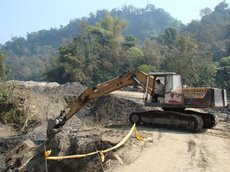
Yucing valley when the earth-movers got busy.


Pleasantries exchanged on the roadside. “Lunch?” “Yes, that would be lovely.” And so I found myself sitting down to dumplings in a typical Taiwanese dumpling joint making polite small talk. “See anything good at Augu this morning?” “No, it was very quiet. Not much around.” “Don’t know how you can spend so much time looking at those black and white waders. Hit the forests more. Colourful birds there and it’s so much prettier than the West Coast.” And then it happened! “Been to Huben lately?” “Yes, last week.” I feel my blood stirring. In an attempt to gain control of my run-away emotions I blurt out, “Saw two Pitta. Heard a Maroon Oriole.” And at that point the wave of anger held inside broke on the shores of my heart. “Huben’s fucked!” There was no disguising my feelings in the way I spat out those words.


Yucing valley being put to the grader.


All my intentions to remain calm and not to get emotional went out the window. I could see the look in his eyes; the judgment. He didn’t need to say anything. It was written all over his face. “Too much time in the sun. Irrational. Emotional. Unstable.”


And the forest is cleared to make way for the water demands of heavy industry.

So smooth. So controlled. And with calmness etched onto his face with perhaps just a hint of a condescending smirk he replied. “That bad? I don’t think it’s that bad. I mean it’s still a good birding spot.” I reply, “Compared to what it was, it’s finished; trashed!” “Oh, I don’t know about that.” And that level of anger within rocketed. “In 2006 there were forty pitta around the village. This year there are four! Four!!! In just six years forty to four. Huben is dead! Everywhere they’re doing the same. They’re concreting every bloody mountain stream they can. Before our eyes they’re destroying what’s left. On Saturday I saw those pitta and it struck me like a hammer. These are very likely the last of Huben’s pitta. What is a certainty is that my infant son will never enjoy seeing a pitta there by the time he’s six.”


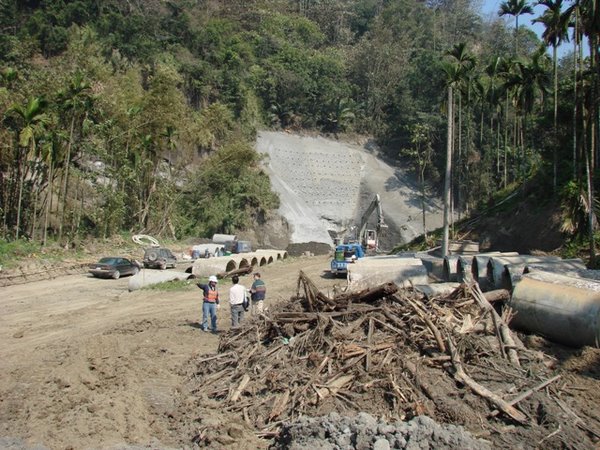
Stripped and bleeding. The forest is no more.

My companion then continued calmly. He emphasized the need for a calm balanced approach and how he needed to find his niche in all this. I retorted, “The calm balanced approach has resulted in the loss of Huben. It hasn’t worked. Only when we say enough and get angry and take to the streets is there any hope of the destruction stopping.” For the first time the calm façade of Mr. Calmness showed a hint or irritation. “Taking to the streets has never helped anyone. It’s not going to save Huben.” Indignant I replied, “How would you know? It hasn’t been tried! It’s too late now. Huben is gone!”


Another stream disappears under concrete. Fairy Pitta nest on stream banks. This spot was a known Fairy Pitta nesting site.

I had had my say. Mr. Calmness wasn’t looking so calm anymore. It was written on his face. A change of topic. Dignity. A stiff upper lip was what was needed to selvage this most unfortunate lunch. I obliged.


Deforestation before our eyes. This happened just a few weeks ago.

Later as I reflected, I couldn’t help wondering if we’ve been so wired by our present environment and education system that even for people who clearly feel something for the natural world we have been so conditioned, programmed, to put the alleged need for what we’ve been taught is “progress” over that of the natural world. In the case of Huben it translates to, “I care about the Fairy Pitta but I mustn’t let that get in the way of progress.” We need to be honest and we need to reflect. What does Huben represent? Huben isn’t just about Fairy Pitta and a dam. It represents the choice of irreversibly proceeding with development of the petrochemical industry at the expense of Taiwan’s natural environment or halting the damage and turning towards a more sustainable future before it was too late. This was about the tipping point on the West Coast.


And more concrete for the rivers.

The first thing we need to do is acknowledge that we failed miserably in protecting the Huben-Hushan IBA (Important Bird Area). Huben is lost. At one point there were scores of NGOs under the umbrella of the Taiwan National Coalition against the Hushan Dam. How many remain today? The issue was very much about protecting the Fairy Pittas' globally most important breeding area. There were several other less prominent but equally important other threatened species residing in the Huben-Hushan IBA.


The reason for the construction of the Hushan Reservoir is largely to supply the water needs for the expansion of heavy industry on the West Coast. Considering the toll that heavy industry takes on the environment it begs the question, “Do we want to go on polluting at even greater levels than we are now?” Apart from the corporations that stand to make even more money in the short term is anyone else going to benefit at all from greater levels of pollution and the destruction of what remains of the natural environment? The Fairy Pitta and Co in Huben aren’t. The critically endangered Taiwan pink dolphins on the west coast aren’t. The farmers aren’t. The fishers aren’t. Our health isn’t. So then why the hell are we doing this then? Because of so called “development!” Because despite all the damage that we know is going to take place we have been conditioned to allow corporations to do whatever they like to make a quick buck.

So what went wrong? Why have we allowed this? We need to ask these questions. Those scores of NGOs need to look at where we went wrong and how this was allowed to happen. If we fail to do that then not only have we allowed Huben to be lost but then we have also gone and spat on its grave and that of the entire West Coast. Our only redemption is to learn from this. If we don’t then we have failed our children and future generations of Taiwan, human and nonhuman, utterly and entirely.


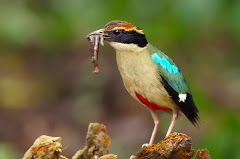
A Huben Fairy Pitta.

Tuesday, June 7, 2011

Pink Dolphins and Kuokuang Petrochemical in the New York Times

The internationally listed Dacheng wetlands which Kuokuang wanted to turn into a petrochemical complex.


On June 5th an article titled "Activism Gets Rolling in Taiwan" by Taiwan-based journalist Ralph Jennings featured in the New York Times. The article focuses on how a recent wave of opposition has halted the planned Kuokuang Petrochemical Project and how issues such as the plight of the Taiwan pink dolphin have become major issues in Taiwan. We're grateful for the publicity that the article gives the Matsu's Fish Conservation Union and our colleagues at Wild at Heart. While organisations such as ours have played their part in focusing attention on issues such as Kuokuang and the plight of the pink dolphins it would be wrong to overlook the fact that many Taiwanese have had enough of the environmental damage done by greedy organisations and individual through their irresponsibly managed heavy industry and have got to the point where they've said "This must stop now!"

See Activism Gets Rolling in Taiwan in the New York Times.

Friday, May 27, 2011

Songshan update: Taipei Dome gets the go-ahead


February 2009:- protestor in the in the last of nearly 700 old camphor trees, which are native to Taiwan, that were removed for a development project of which the legality was still before the courts and of which the environmental impact and zoning procedures were not yet complete.


In 2009 Stop Hushan Dam blog carried several posts on the clearing of the old Songshan Tobacco factory site in Xinyi before Environmental Impact Assessment had passed. The developer was given police protection to clear the site under highly dubious legality to put it mildly. More than two years on and the project only received the go-ahead yesterday by a city council-loaded EIA review committee in what can only be described as a mockery of the environmental impact assessment process. Songshan remains a continuing example of an environmental protection administration going all out to promote the interests of the developer at the expense of the environment and the local people. So much for all the political double speak on the need to "green" Taipei.

Yesterday Taipei City’s Environmental Impact Assessment Review Committee gave conditional approval to the controversial Taipei Dome construction project paving the way for the construction of the 500,000m2 commercial complex in the Xinyi District. The EIA Review Committee approved the project by a vote of eight to five. With city officials accounting for seven of the 13 committee members the pro developer outcome was hardly surprising. Taiwan Green Party spokesman Pan Han-shen accused the city government of hijacking the review process.

The Songshan Tobacco Factory was established under Japanese colonial rule in the 1930s. The area has remained an open green area supporting wildlife in the heart of Taipei for many years. After the factory was closed in 1998 the area was further able to revert back to its natural state and become covered in thick vegetation and has become a vitally important oasis for wildlife within Taipei providing critically important habitat for several rare species. In 2006, the Taipei City Government signed a contract with the Farglory Group to build a 429,000m² cultural and sports dome complex costing around US$695.9 million on the site. Environmentalists and local residents oppose the project.

Taipei Times:- Green Party Taiwan halts tree removal at site of old Songshan Tobacco Factory

Update: Disregard for the legal process - The last of the great Songshan camphor trees

Update: It's gone ! Total disregard of the legal process - The last of the great Songshan camphor trees has gone !

More on the Songshan Tree issue

Songshan: Before and After Photos

Songshan update: case against activists dismissed

Monday, May 23, 2011

Update on the Fairy Pitta

A Huben Fairy Pitta:- photo courtesy of Richard Yu.


An unseasonable dry spell from March to mid May seems to be one of the prime suspects for the cause of a very poor general spring migration. The Fairy Pitta followed this trend and the first arrivals were recorded in late April rather than mid April. The bulk of the pitta arriving in the Huben-Hushan area appeared to arrive during the period 5th - 8th May.

It is still too early to hazard any guesses on a decrease or increase in numbers for this season. Fairly heavy seasonal rains have been experienced since mid May but it appears that these rains haven't resulted in flooding which could threaten nesting pitta. Though not likely to make landfall on Taiwan; severe tropical storm Songda should pass to the east of Taiwan bringing heavy rains to the island later this week.

Researchers from the Taiwan Endemic Research Institute will be monitoring and conducting research on the breeding Fairy Pitta once again this season. The construction Hushan Dam continues and regrettably independent access to the site to observe and monitor impacts is restricted so the actual situation on the ground remains very much a mystery. We can only hope the mitigation measures are being implemented and monitored. We will continue to provide updates on the Fairy Pitta during this season as we learn things.

Sunday, May 22, 2011

"Water, water, every where, Nor any drop to drink"

Hushan's Yucing valley before it was dug out to make way for the highly controversial Hushan Dam.


"Water, water, every where, Nor any drop to drink" said Coleridge in 'The Rime of the Ancyent Marinere.' With the recent day spell we've been having in Taiwan; and is always the case when we experience one; talk of the need for new reservoirs comes to the fore in the media. "Water, water, everywhere and not a drop to drink" becomes the cry.

Typically the argument goes that Taiwan doesn't have sufficient reservoirs for its needs and there are volumes of wasted water pointlessly flowing down rivers from the mountains into the ocean. All that is needed is to build more dams and solve the problem.

Fresh water flowing into the sea is seen as wasteful and no thought is given to its critical role in maintaining vitally important estuarine ecosystems. The dust problem on the lower reaches of the Jhoushui River is conveniently forgotten. This dust-bowl situation in Changhua and Yunlin Counties has been created by the damming of the Jhoushui River in its middle course leaving the wide floodplain of the lower reaches dry and dusty with little water at the mercy of fierce coastal winds.

The dusty desolate lower reaches of the Jhoushui River on the border of Changhua and Yunlin Counties. This dust-bowl situation on the river's wide floodplain is attributed to reduced volumes of water in the river's lower course due to damming in its the middle course.


The cost to the natural environment in the damming of rivers is massive and irreversible. A prime example is the tremendous damage to the Huben-Hushan area with the current construction of the Hushan Reservoir project. This project poses a direct threat to the future survival of Red-Listed animals and plants such as the Fairy Pitta, Taiwan pink dolphin and Begonia ravenii. In addition, the risk the dam poses to people living nearby has largely been pushed aside but after the recent Japanese quake and tsunami should we not take a renewed look at the wisdom of constructing a dam in a very unstable area near the Jiji fault; the epicenter of the huge September 1999 earthquake.

The Huben-Hushan forest being cleared for the Hushan Dam project. The area is listed internationally as an Important Bird Area (IBA) because it is globally the most important breeding area for the IUCN Red-Listed Fairy Pitta.


An interesting letter appeared in the Taipei Times on Tuesday by Lee Ken-cheng, director of Mercy on the Earth, Taiwan urging a closer look at the benefits of addressing the problem water leakage on existing reservoirs to increase reservoir effectiveness rather than building new reservoirs.

See New take on how to meet water needs is necessary in Tuesday's Taipei Times.

Thursday, January 20, 2011

Pink Dolphin Afternoon Tea

Much of the water from the Hushan Reservoir will be for the use of Taiwan's petrochemical industry and their planned developments on the west coast which threatens the critically endangered Taiwan pink dolphins and the Dacheng Important Bird Area. The Matsu's Fish Conservation Union will be hosting an afternoon tea to help raise funds for pink dolphin conservation.


Dear friends of Taiwan environment,

Thank you for your concern and support of the Taiwan pink dolphin (Sousa chinensis Matsu’s Fish) conservation effort. We would like to invite you to a special fundraising event on Sunday, February 13, 2011.

Protect Taiwan’s Beautiful West Coast—Save the Pink Dolphin!

Four years ago, six organizations learned of the plight of the Eastern Taiwan Strait population of pink dolphins—that they faced almost certain extinction in the very near future with a drastically reduced population numbering around just 75—and very quickly formed the Matsu’s Fish Conservation Union (MFCU) to begin work to save them.

The Union’s mission is to educate the public about the pink dolphin, to advocate for the protection of the dolphin’s habitat, and to be a watchdog for any industrial development that adversely affects that habitat. In addition, we support scientific research on the pink dolphin, convene international conferences on pink dolphin research, and promote exchange of information with international conservation groups.

Even with limited financial resources and a skeletal staff, the Matsu’s Fish Conservation Union and its dedicated volunteers have achieved much in the last three years.

Volunteer Training
- Held training sessions for volunteer guides and dolphin observers for three years running.
Attendants for each session numbered over 120.

Education, Publication and Protest
- Organized a protest march against the development of Kuokuang petrochemical plant. Over 10,000 people were estimated to have participated in this march to the Presidential Offices on November 13, 2010.
- Organized the first annual Taiwan Pink Dolphin Road Race on April 25, 2010
- Organized Thousands Protect the Changhua Coast event on October 25, 2010
- Published children’s picture book, Alive, about the pink dolphin
- Produced a number of short films to educate the public

Taiwan's Critically Endangered Pink Dolphins
《媽祖魚(白海豚)保育短片》
《帶著白海豚去遶境》
《台灣的極危險瀕臨絕種白海豚》
- Provided on-shore dolphin-watching opportunities to the public.
- Held presentations on the pink dolphin situation in a variety of settings.

Government Watchdog and Advocacy Work
Our long-term goals include being a watchdog for any development plans that would threaten the ecological system on which the dolphins depend. The threats are land reclamation along the coast for development, underwater noise, decrease of freshwater input from the river, entanglement in fishing nets and general air and water pollution in the dolphins’ habitat.

Currently, we are focusing our effort in advocating for habitat protection against the push to develop more highly polluting plants on the Changhua coast by Kuokuang Petrochemical. We are closely monitoring the planned diversion of waters from the Da-Du River for industry use.
- In January of 2008, as direct result of our successful lobbying and advocacy efforts, the topic of pink dolphin conservation and habitat protection has begun to be addressed by the Sustainability Commission of the Executive Yuan and potential impact on dolphin habitat is now required to be addressed in all environmental impact assessment reports for projects in the area.
- In 2009, again through successful lobbying and petition, we began consultation work with multiple government agencies on the pink dolphin issue and joined the Environmental Protection Agency on its research trip to Hong Kong to study their efforts in pink dolphin conservation.
- The Forest Service is expected to submit a draft on pink dolphin habitat protection, which would be sent to Wildlife Conservation Advisory Committee for discussion in early 2011.

International Exchange
- Helped organize Second Annual International Workshop on Conservation and Research Needs of the Eastern Taiwan Strait Population of Indo-pacific Humpback Dolphins Sousa chinensis in September 2007
- Held workshop on Taiwan Pink Dolphin Critical Habitat, press conference and public hearing after the workshop. Papers from the workshop have been accepted for publication by Marine Policy in November 2010.

Please join us for this special fundraising event:
Protect Our Beautiful Coast, and Save the Pink Dolphin on February 13, 2011 at 2pm.
- Taiwanese food
- organic fruits and vegetables
- auction of arts and crafts items
- showing of videos on pink dolphin conservation

All proceeds will help pay for independent scientific research, an international workshop on fisheries and dolphins as well as administration and staffing costs of the Matsu’s Fish Conservation Union.

Help us make Taiwan the home for the pink dolphin now and forever. Please donate today!

Sincerely,

Chen-Yi Kan, Secretary General, Matsu’s Fish Conservation Union
Chia-Yang Tsai, Director, Changhua Environmental Protection Union
Robin Winkler, Founder, Wild at Heart Legal Defense Association, Taiwan

Time: Sunday, February 13, 2011, 2pm
Place: Y17台北市青少年育樂中心流行廣場五樓 (5F No. 17, Section 1, Ren-Ai Road, Taipei)
Tickets: NT$ 2000 (tax-deductible)
Account Name: Wild at Heart Legal Defense Association
Bank Name and Number: :兆豐國際商業銀行城中分行(代碼:017)
Telephone: 02-23825789 Fax 02-23825810

Friday, December 31, 2010

Happy New Year !

A Huben Fairy Pitta (Pitta nympha): photo courtesy of Richard Yu.


Happy New Year and all the best for 2011 !


"Because every green measure, every conservation effort and all the little economies we could make in our daily lives, may look insignificant if we choose to look at the big picture. On the other hand, if we view that big picture as millions of little choices made by people just like us, that's how we can come to understand why it's our own choices that are so important."
A comment posted on Birdforum by James Owen.

Monday, December 20, 2010

Taiwan Bush Warbler: Another New Bird for the Huben-Hushan IBA Bird List

The past few weeks have seen the addition of two new birds to the Huban-Hushan IBA list. On Saturday 6 December bird banders captured an endemic Taiwan Bush Warbler Bradypterus alishanensis in the IBA. The Taiwan Bush Warbler is generally regarded as a bird of the the higher mid altitudes (1700-2600m) but can be found from 1200-3600m. It is unusual to find them in areas such as Huben with an altitude of around 100-200m. Taiwan Bush Warblers are known to descend to lower altitudes during cold periods but that is usually above 1000m.

See the OBC Imagebase for photos of Taiwan Bush Warbler.

Thursday, December 9, 2010

Asian Stubtail: New Bird for the Huben-Hushan IBA Bird List

On Saturday 27th November bird banders captured an Asian Stubtail Urosphena squameiceps while doing banding work in the Huben-Hushan Important Bird Area (IBA). This is the first confirmed record of the species in the Huben-Hushan IBA. Earlier in the week a researcher who is familiar with the species believed he had heard a Stubtail calling. However, the bird could not be located.

See the OBC Imagebase for photos of Asian Stubtail.

Monday, November 29, 2010

Resident Black Eagle in Huben ! Wonderful development or should we be asking why?


On 21st September 2009 the first record of a Black Eagle (Ictinaetus malayensis) over the Huben-Hushan IBA was made. On 12 March 2010 researchers from the Taiwan Endemic Species Research Institute observed an Indian Black Eagle over the forests adjacent to Huben village. This was the second record of a Black Eagle in the Huben-Hushan IBA. Since that time a Black Eagle has been observed fairly regularly in the general area.

Recently there have been several sightings over the forest near the Bai-ma Temple. It appears that this Black Eagle has become resident in the Huben-Hushan area. This is indeed a very exciting development but also begs the question "why?"

The Indian Black Eagle on Taiwan is listed as Vulnerable and the total population is believed to be between 500-1000 individuals. The Black Eagle is generally associated with healthy old growth mountain forest on Taiwan. The Huben-Hushan IBA has suffered tremendous degradation in recent years and is a pale shade of what the IBA was just five short years ago. True, a few patches of reasonable forest remain. Most of these patches are disturbed in some way or the other and can hardly now be described as healthy old growth forest. In some isolated valleys some very small patches of original forest do remain. Is the Huben-Hushan IBA healthy enough to be genuinely attractive to Black Eagles or is there more to it? Could it be that as healthy mountain forest habitat is being lost, young Black Eagles are not able to find territories in their original domain and are now being forced into marginal lowland forest habitat like the Huben-Hushan IBA? These are questions that need to be asked and answered before we can truly proclaim the presence of a Black Eagle in the Huben-Hushan IBA as a wonderful development.

Also see:
Indian Black Eagle observed over Huben

Thursday, November 11, 2010

November 13, march:- Say No to Kuokuang Petrochemical! Protect our wetlands on the Chunghua coast!

------------------------- Click picture to enlarge -------------------------


On Saturday 13 November 2010, an environmental protection march primarily focused on Kuokuang Plant and other petrochemical issues will take place in Taipei. Petrochemical projects are the Kuokuang Plant planned for Changhua, the FPG 6th Naptha cracker expansion in Yunlin and the 3rd cracker in Kaohsiung. All these petrochemical projects will have a devastating impact on Taiwan's natural environmental. The Hushan Dam will supply water to the FPG 6th Naptha cracker expansion and other such projects. The march is a registered permitted march so foreign persons in Taiwan who wish to join do not need to worry about deportation for being outside of their visa purposes! Meet other marchers at the Zhongxiao Fuxing MRT Station at 14:00 and marchers will march to the Presidential Square at 15:00 where there will be a gathering, and a street party and performances start at 17:00.

Date: Saturday 13 November 2010
Meeting Point: Zhongxiao Fuxing MRT Station
Time: 14:00
Contact: jwang(at)wildatheart.org.tw

For more infomation visit the official website.
Also see:
11/13 Petrochemical Policy should turn Green Salvation Parade

Sunday, October 31, 2010

The Silver Ghosts of Huben

By Impiyani


Before dawn I was in Huben. It was still very dark and there was a chill in the air as I turned into the yard of Mr. Chang's traditional Taiwanese house. Multitudes of dogs snarled and yapped. They didn't seem very happy to see me. A large roster came over. He seemed friendlier. It was almost as if he was coming over for a predawn chat before doing his morning duty and waking the neighbourhood. Mr. Chang came out and we headed off up the track following the river. We both bounced around on our motorcycles as we made our way to his little wooden cabin further up the valley. Today we had a purpose. We were after the very elusive Silver Ghost of Taiwan's forests.

We reached the cabin and parked the motorcycles. We loaded up and climbed down onto the rocks in the river. To go deep into the Huben forest one has to follow the course of a river or stream. The steep cliffs and thick vegetation make it impossible to get deep into the remote parts of the forest other than by this means. Streams in Huben are very rocky. Generally, they don't carry very much water but when it rains they become raging torrents.

It was still dark as we started on our way. We hadn't gone far when the predawn calling of an endemic Taiwan Partridge started. Mr. Chang responded and the partridge called back. It wasn't far off but the thick forest shielded it from view. We carried on and in the east dawn began to break. The calls of songbirds surrounded us but it was too dark to see anything.

High in the trees above us a Crested Serpent Eagle greeted the new day with a call. Mr. Chang smiled and called back. The eagle immediately responded. We carried on with the soft calls of the eagle floating to us on the breeze.

It was hard going. Despite the chill in the air I was beginning to build up quite a sweat. Mr. Chang indicated we were getting close. Even the slightest rustle of clothing is enough to startle the Ghost. We moved very quietly. We carefully stepped from rock to rock. The forest was just light enough to see a short distance ahead now. We moved forward slowly. We would stop to listen and scan the area ahead for movement. Mr. Chang's sharp ears caught something. I hadn't heard it but he said he had. The Ghost was near.

We moved on. The river narrowed and vegetation had taken root in the stream bed. We stopped and searched the shadows ahead. One second I was looking at a shadow and the next instant the Ghost stepped forward from out of the shadow. We both saw the Ghost at the same instant. There it was. The distinct silver-white back, crest and tail contrasting against the dazzling blue of the body and the fire-red face and legs. I started to shake with excitement. I could hear my heart drumming in my ears. The Ghost melted into the vegetation and disappeared. I stood there breathless. There really wasn't enough light for a shot but I took my camera out of its bag and moved forward.

I crept over boulders and moved towards where the Ghost had vanished. I crept forward and once again it stepped out of the shadows. It was very dark but I took a few shots just to capture the moment. In an almost dream-like state I watched the Silver Ghost moving about in front of me.

A male Swinhoe's Pheasant (Lophura swinhoii) moves through the Huben undergrowth.


Robert Swinhoe had discovered the species, endemic to Taiwan, in April of 1862. He sent the skin to the great English ornithologist John Gould. Gould was the Curator and Preserver at the museum of the Zoological Society of London. It was the height of the great voyages of discovery and Gould was in the unique position of being on the receiving end of skins that were being sent to the Society from every corner of the globe.

Gould had thus described an extraordinary number of species from around the world. Amongst these were Darwin’s legendary finches. He wrote up the description for Robert Swinhoe’s new pheasant and it was published in the 1863 edition of The Ibis. Even the stuffy Victorian, Gould, was impressed by Formosa's Silver Ghost and stated, “This exceedingly beautiful species is one of the most remarkable novelties I have had the good fortune to describe.” He named the species after Swinhoe; Lophura swinhoii. When this majestic species was first revealed to the West, many dubbed the newly described Swinhoe's Pheasant as the world's most beautiful bird. To some, it remains so, and certainly the noble gent I was watching totally captivated me with its graceful splendor.

The pheasant moved off slowly. It was unaware of my presence and I was able to watch it for about two minutes in all. All too quickly time passed and it melted back into the forest. Mr. Chang and I pressed on. I was euphoric. This was my first Huben male. The Swinhoe's Pheasant is considered a bird of the mid elevation mountain forests. The handful that inhabit the lowland hills of Huben indicate that the species certainly did inhabit the central Taiwan lowland forests before humankind turned much of the lush lowland forest into monocrop fields, concrete jungles and industrial estates.

We moved on and then retraced our steps hoping to get another view of the pheasant. No luck second time round, so we pressed on again. Just as we came to a steep rise Mr. Chang’s sharp ears had heard something. We stopped and waited. Moments later I heard it too. There were Ghosts in the undergrowth. We waited. Suddenly Mr. Chang pointed. I didn't see anything and then my eyes caught a movement. There was a pair. I watched them stride through the undergrowth and then they vanished. It was time to head back.

Male Swinhoe's Pheasant (Lophura swinhoii):- Photo courtesy of Richard Yu.


We walked back down the stream. Monarchs, Fulvettas, and Bulbuls moved about through the trees. Some Taiwan Scimitar Babblers started to call. The Crested Serpent Eagle was calling, too. I was soaking the tranquility up and savoring it.At Mr. Chang's cabin we made some Oolong tea. We talked about Huben and its birds. I mentioned the Malayan Night Heron and Mr. Chang imitated the call. From just outside the window there was an immediate response. We both laughed. It was time to go and I climbed on my motorcycle. I had only gone a few meters when the Malayan Night Heron flew across the road. I stopped and snapped a quick shot of it in the early morning sun. It had been very good morning! And mornings such as this are becoming tragically rare.

Malayan Night Heron (Gorsachius melanolophus).


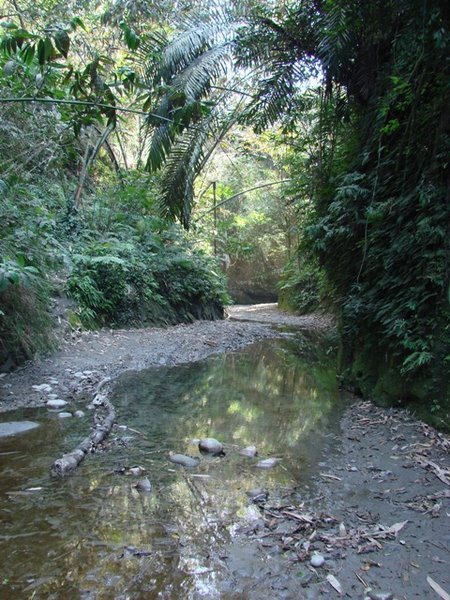
It has been several years since that morning. Since then, much of the Huben-Hushan Important Bird Area (IBA) has fallen victim to the Hushan Reservoir Project, a project that went ahead under extremely dubious legality. The stream is still there. The lower reaches below Mr. Chang’s cabin are covered in concrete now, just another of the concreted streams that have been covered over in the name of anti-erosion work. Too often streams in this area fall victim to schemes cooked up local contractors and officials where healthy streams that don’t have erosion problems get covered in concrete just for a quick buck.

The upper reaches of the stream are still good. The pheasants are still hanging on in their last lowland outpost. The reservoir will no doubt pose a serious barrier to threatened terrestrial birds like the Swinhoe’s Pheasant and Taiwan Partridge. It will increasingly isolate them as their genetic flow from the mountains is severed. Likely, the concrete will keep advancing slowly but steadily upstream and the trees will give way to fields and houses and the last lowland outpost of the noble Swinhoe’s Pheasant will be no more.

This is just one of many such tales. Downstream of the Hushan Reservoir project the fate of the Taiwan pink dolphins hangs in the balance. As we march into the second decade of the new millennium so much hangs in the balance. The catastrophe at Copenhagen has shown us that the world still doesn’t get it. In parting, I’ll leave you with a few words I saw in a post on Birdforum.net by a member named James Owen.

Because every green measure, every conservation effort and all the little economies we could make in our daily lives, may look insignificant if we choose to look at the big picture. On the other hand, if we view that big picture as millions of little choices made by people just like us, that's how we can come to understand why it's our own choices that are so important.

Taiwan pink dolphin (Sousa chinensis).

Wednesday, August 4, 2010

Press conference: Year End Elections: First Wave of Green Party Candidates

We've just been sent a press release from the Taiwan Green Party. We'll be interested to hear what their candidates have to say amidst the mudslinging contest between the two major parties; the DPP and KMT. Here's the press release and we'll let you know shortly what the Green Party candidates have to say.


“Give Blue and Green Back to the Skies and Earth; Take Back Politics for the People”

Time: 1400-1500 pm 4 August 2010
Place: Taipei Artists Village No 7 Beiping E Rd (corner of Tianjing Road)

With the year-end elections in Taiwan’s five special municipalities we once again face prospects of the same scorched earth that we were left with after the 2008 mudslinging exercise by the two major political parties.

This time, the candidates put forth by the Chinese Nationalist Party (KMT) and the Democratic Progressive Party (DPP) are little more than pawns for their respective mayoral candidates and we can expect a continuation of their fiddling while Taipei burns if they are elected again.

The Green Party asks: When will politics get back to being a means for helping the people rather than a means for helping the politicos?

This afternoon we are pleased to announce the first group of Green Party candidates for the year end elections and will also be laying out our policy and procedure for seeking other candidates to join us in the important election activities.

Also attending the press conference are children and companions of the candidates.
Please come and join us and get to know the candidates and the Green Party. Refreshments will be served.

Taipei City District 2 (Neihu, Nangang) LEE Ying-hsuan 25, Soochow University Masters Student

Taipei City District 3 (Sungshan, Sinyi) PAN Hansheng 40, Co-convenor of the Green Party Taiwan

Taipei City District 6 (Da An, Wunshan) CHANG Honglin 39, Secretary General of the Green Party Taiwan

New Taipei City District 1 (Tamshui, Bali, Shimen, Sanjhih) WANG Chongming 31, Tanshui Bring the Youth Back Community Development Association

Contact: Green Party Co-convener PAN Hansheng 0935-295815, Secretary General CHANG Honglin 0936-047168

綠黨五都市議員選舉第一波提名記者會
把藍綠還給天地,讓政治回歸生活

時間:2010年8月4日(三) 下午2點~3點
地點:台北國際藝術村 幽竹廳 (北平東路7號,天津街口)

五都選舉又變成國、民兩黨的總統選舉前哨戰,「藍」天「綠」地又將變成一片焦土,而兩黨市議員候選人總是市長候選人的馬前卒,選後的議會勢必繼續延燒,政治如何回到改善人民生活的初衷呢?

綠黨將公布第一批市議員參選人,及公開徵求候選人條件與作法。
參選人的孩子、伴侶動物、愛人同志也將出席記者會與大家認識。

現場備有簡單茶點,台北國際藝術村的環境,也適合記者朋友與參選人的團隊更深入的互動與瞭解。

歡迎蒞臨採訪!

第一波提名參選人:
台北市第二選區(內湖、南港) 李盈萱 25歲 東吳人權所碩士生
台北市第三選區(松山、信義) 潘翰聲 40歲 綠黨召集人
台北市第六選區(大安、文山) 張宏林 39歲 綠黨秘書長
新北市第一選區(淡水、八里、石門、三芝) 王鐘銘 31歲

新聞聯絡:
綠黨 02-2392-0508 召集人 潘翰聲0935-295815 秘書長 張宏林0936-047168

Friday, July 30, 2010

Opposition pressures Government in wake of the second Formosa fire

Sunday night's fire at the Formosa Plastics Naphtha Cracker plant in Mailiao in Yunlin County. Formosa Plastics were the winners of the infamous Black Planet Award in 2009 for their horrendous environmental track record. Photo courtesy of MFCU.


In response to Sunday night's fire at the Formosa Plastics Group plant in Mailiao in Yunlin County the opposition Democratic Progressive Party (DPP) said on Wednesday that it would not likely support further expansion for the petrochemical industry if it were re-elected in 2012 because of health and environmental concerns. We welcome this apparent change of heart on the DPP's position on the expansion of the petrochemical industry. However, the DPP needs to demonstrate commitment to such a position to show that their commitment is real. Words alone are meaningless and nothing but opportune criticism of the ruling KMT regime. Yesterday, Yunlin County Commissioner Su Chih-feng, a member of the opposition DPP, joined a group of Mailiao Township residents protesting outside the Executive Yuan. The question is what is Su going to do today? Joining protests without action is nothing but politicking.

We remember well the then-DPP administration in 2005 pushing for the construction of a planned Naphtha Cracker plant in neighbouring Changhua County. We also remember that Yunlin County Commissioner Su never got behind efforts to stop the Hushan Dam project, a project largely to ensure the water needs of the planned expansion of the petrochemical industry on the west coast.

The DPP's origins go back to the environmental movement of the mid 1980s when Taiwan was under the one-party-dictatorship of the Chinese National Party (KMT). The KMT had enacted Marshal Law in the late 1940s and this period of state-sanctioned terror was only "lifted" in the late 1980s. Because of the DPPs environmental roots the DPP and its allies have been known as the Greens or Green Camp; something many who have concerns for the Taiwan environment find distasteful considering how quickly the DPP abandoned their environmental beliefs when they got into power in 2000. Let's hope that the DPP has had a genuine change of heart and have returned to their original core beliefs.

The KMT also seems to be attempting some form of damage control. A KMT Legislator has proposed amending the Act Governing the Allocation of Government Revenues and Expenditures to make polluting enterprises give 20 percent of their income tax and 30 percent of their commodity tax directly to cities and counties where their factories are located. The KMT has stopped well short of any attempt to rein in the petrochemical industry and still seems determined to ensure the planned expansion of the industry succeeds. Their draconian forced seizure of property to make way for planned industrial expansion moved up a level. This time it wasn't farmers but unwanted trees and elderly residents who were 'cleared' to make way for the Taipei International Flora Expo.

For more, see the following Taipei Times articles:
DPP turns on petrochemicals

Formosa may need two weeks to restart

Dead fish thrown at Executive Yuan


Also see:
Government quick to defend Formosa Plastics in the wake of a second fire

Formosa Plastics on fire again

Wednesday, July 28, 2010

Farm seizures: Siangsiliao farmers fight to save their community

Farm seizures by the government to clear the land for planned industrial expansion are once again in the news. This time it's not the farmers of Dapu in Miaoli County in northwest Taiwan but the farmers of Siangsiliao village in Erlin Township in west-central Taiwan that are being driven off the land to make way for the highly controversial Central Taiwan Science Park expansion at Erlin. See Siangsiliao farmers fight to save their community in today's Taipei times.


Also see: Dapu farmland seizures

Monday, July 26, 2010

Dapu farmland seizures

The Dapu farmland seizures that have featured prominently in the news for the past fortnight once again highlight the government's apparent crusade to ensure their corporate pals get whatever they desire and to hell with anyone or thing that stands in the way.

The seizure of farmland and private land is nothing new in Taiwan. It was done for the Hushan Dam project and they're doing it for the Central Science Park. Often, even if they don't actually seize the land, farms in close proximity to industrial developments fall victim to pollution contaminating fields and turning once productive agricultural land into toxic weed beds.

The seizure of farmland destroys rural communities. Their way of life perishes. Apart from the destruction of rural communities and the social problems this brings as members of agricultural communities are forced to find a new way of life in an urban environment where their skills are not valued or seen as useful; we should also be questioning the wisdom of reducing the nation's agricultural output in a period when food security should be a major concern of the government. With the impact that global warming will have on international food production and with China squeezing Taiwan out of the international arena at every opportunity, should we really be seizing farmland to build industrial complexes that will increase Taiwan's carbon footprint and offer only unsustainable short-term economic benefit usually to only a select few?

What follows is a list of several articles that have appeared in the media concerning the issue of the seizure of farmland for so-called industrial development.

Now is the right time for major land reform

EDITORIAL : Taiwan lacks food security strategy

Land seizure comes under fire

Wu offers Dapu farmers new farmland

Rice fields outside the Presidential Office

Government must stop seizing our farmland

Farmers fail to meet president


Also see:
Farm seizures: Siangsiliao farmers fight to save their community

Friday, July 23, 2010

Hushan Dam to be completed in 2014

Security check point at the entrance to the Hushan Reservoir project site. Deforested hills are visible in the back ground.


Today's Taipei Times tells us that Hushan Reservoir will be completed in 2014. According to the brief article that appears in today's Taipei Times "the construction of the Hushan Reservoir in Yunlin County is scheduled to be completed in 2014 after environmental issues have been resolved." The article goes on to state that, "The reservoir, designed for joint operation with the Jiji Diversion Weir on Jhuoshuei River, will be able to supply 694,000 tonnes of water per day for public, industrial and household use in the Yunlin region,... The project will improve the quantity and quality of domestic water supply in the region,... At present, residents of the area rely heavily on groundwater, it said, adding that the Hushan reservoir project would help prevent land subsidence resulting from groundwater extraction."

At face value it sounds as if the Hushan Reservoir project is the solution to Yunlin County's water problems. However, a very different picture emerges when you take a closer look.

A major cause of the need for residents of the area to have to rely so heavily on the pumping groundwater that ultimately leads to land subsidence problems is because of the over exploitation of the county's water resources by heavy industry. Supposedly, the Hushan Reservoir will correct this. However, when questions are asked as to how much of the project's water is to be allocated to domestic usage and how much is being allocated to industrial usage it soon becomes apparent that Hushan isn't quite what the authorities want you to believe. Figures exceeding even 80% for industrial usage become apparent. And this water isn't to alleviate the current problem but rather to meet the water needs of planned expansion of heavy pollution- generating industry. Industry that will drastically increase Taiwan's carbon emissions at a time when we should be reducing them. The highly controversial Kuokuang Petrochemical Park development alone will result in at least a 7% increase in Taiwan's carbon emissions not to mention the pollution problems it will cause and the destruction of critically important habitat for the critically endangered Taiwan pink dolphins.

In October 2007, despite previous assurances by the Yunlin County based Formosa Plastics Group that they would keep their water usage to a level not exceeding 257,000 tonnes/day, the applied to increase it to 351,000 tonnes/day. When Formosa Plastics committed to 257,000 tonnes/day this commitment was backed by a pledge from the chairman of Formosa Plastics who said they would shut down operations to the extent necessary to meet their commitment to keep water use down. (see More water for Formosa means less for Taiwan) In 2009 the Formosa Plastics Group was awarded the infamous Black Planet Award for its horrendous global environmental track record.

The construction of Hushan Dam has destroyed much of the most important breeding area for the globally threatened Fairy Pitta. The Fairy Pitta wasn't even mentioned in the original environmental impact assessment. The green light for the project was given under extremely dubious legality in 2007 when the Environmental Protection Administration minister told developers that the decision by the EPA's own environmental impact assessment commission was non-binding. The EIA commission had found that work on the project was illegal and should immediately be halted. The legality of the Hushan Reservoir Project still remains before the courts.

The article concludes saying that the Water Resources agency said it had assembled a team of conservationists that, together with Council of Agriculture officials, would conduct studies on forest and river ecology systems in the areas near the reservoir..." and that the agency "would focus on plant and animal conservation, the creation of new habitats and raising environmental awareness."

Again this sounds good but how are we to trust an agency that omitted to even mention the globally threatened Fairy Pitta in its original assessment? The Hushan project has been anything but transparent. What assurances are there of independent study? Many so called "independent" environmental groups in Taiwan are largely headed by academics and others employed by state-owned institutions and organisations. Such people are unlikely to challenge the the state because of fear of jeopardizing their careers within state-run organisations. Many so called NGOs are dependant on state funds or handouts from the very corporations they should be "confronting." (see The 2007 International Symposium for the Fairy Pitta)

Just how will the Hushan Dam Project be perceived by future generations that inherit the problems resulting from run-away heavy industrial development on Taiwan's west coast. Will it stand as a shining example of development? Or will it stand as an everlasting example of the failure of the Taiwan Environmental Protection Administration to fulfil its mandate which resulted in horrendous environmental destruction and horrific pollution problems? Will Hushan's epitaph be glorious or will it be the extinction of the Taiwan pink dolphins and other species like the Fairy Pitta? Will it be even higher cancer rates in an area that is already seven times the national average? Will the long term health costs and toxic landscape justify the short term financial gains for a few elite business executes? With all the mess we're leaving for our youth and just the next generation, I think the authors of Hushan, Kuokuang and all those other greedy projects will be remembered right up there in a category amongst slave traders and all the other scum of humanity's greedy past.

Monday, July 19, 2010

Corruption in high places: High Court judges and prosecutor held on graft charges

Three High Court judges and a prosecutor held on graft charges ! Former Chinese Nationalist Party (KMT) legislator and Miaoli County commissioner Ho Chi-hui on the run. This scandal has dominated the news for the past week. (see Three judges, prosecutor held on graft charges; Ma accepts Lai In-jaw's resignation)

This most recent scandal followed close on the heels of the assassination of gang boss Weng Chi-nan while some of Taichung's top cops were chilling out in the gangster's office during the shooting and failed to do anything. In the words of Taichung City Police Department Commissioner Hu Mu-yuan "The officers were allegedly connected to gang members and ignored the crime that took place in their presence." As the story continued to break it became clear that Taichung's cops were a regular feature at Weng's office. (see Police sanctioned after man dies in shower of bullets)

One also can't help but remember the dubious legal proceedings in former Taiwan President Chen Shui-bian's corruption case and how current Taiwan President Ma Ying-jeou came out of his mess spotlessly clean when he was charged with corruption in 2007 shortly before he successfully ran as the KMT candidate for the presidency in the 2008 elections. You see it was all his accountant's doing. He put the money into Ma's bank account. (See Unveiling the real Ma Ying-jeou; A Visit with Former President Chen Shui-bian Raises Questions on Taiwan's Double Standard of Justice; Taiwan: As the World Turns Greased With Corruption)

Corruption in high places is nothing new in Taiwan. It has a shamefully long history. One can't help but be suspicious of the judiciary. One can't help but wonder if there are such things as a fair trial, justice, due process and transparency in Taiwan? Dubious decisions in the cases of the Songshan Tobacco Factory, Hushan Dam and the Kuokuang Petrochemical Park Development remain just that; dubious! One can't help but wonder if Mother Earth, the Taiwan pink dolphins and Hushan's Fairy Pittas could get a fair hearing in Taiwan, can you?

(See Disregard for the legal process:- The last of the great Songshan camphor trees; A First for Taiwan: Supreme Administrative Court Upholds Decision to Void Central Science Park EIA – Farmers, Lawyers & Social Groups Petition )

Wednesday, June 9, 2010

Ma’s Gang Ramps Up Taiwan’s Emissions, Turns a Blind Eye to Biodiversity and Health Concerns be Damned: “There Ain’t No Stoppin Us!”

A press release sent to us this morning by the Matsu's Fish Conservation Union (MFCU).


MFCU Press Release:
For Immediate Release

Ma’s Gang Ramps Up Taiwan’s Emissions, Turns a Blind Eye to Biodiversity and Health Concerns be Damned: “There Ain’t No Stoppin Us!”

Press conference sponsored by the Matsu’s Fish Conservation Union (MFCU) in front of the Taiwan Environmental Protection [sic] Administration

9 June 2010 1:30 pm
83, Zhonghua Rd. Sec. 1, Zhongzheng District, Taipei City
台北市中正區中華路1段83號


A mega petrochemical project of the Kuokuang Petrochemical Technology Co. (KPTC) which in the words of its major shareholder, China Petroleum is being built “to facilitate the vertical upstream, midstream, and downstream integration of oil refining and petrochemical production。。。 as part of a Petrochemical Technology Zone Joint Investment Plan。。。 including the construction of an oil refinery, olefin center, aromatic hydrocarbons center, mid- and downstream petrochemical derivatives plants, co-generation facilities, and industrial harbor.

Originally slated for Yunlin County, next to the infamous Formosa Plastics Offshore Island facility, a more welcoming Chinese KMT local government in Changhua County will host this project that will see Taiwan’s CO2 emissions increase by six to eight percent and at the same time spell the death sentence for a population of critically endangered pink dolphins (Indo Pacific humpback dolphins Sousa chinensis). When MA and Co. get their gang in gear, whether it is climate change or biodiversity, they have got what it takes to be a model for environmental idiocy. The target site for the project also happens to be Taiwan’s cancer corridor, which will be sure to earn MA et al. more high marks for “giving a damn” about the people of Taiwan.

The occasion for this press conference is the unprecedented speed with which Taiwan’s “Mr. EB” (environmental bonehead) and EPA boss, Stephen Shen, can suck up to short term business interests and get those pesky environmental impact assessments out of the way.

In early May, shareholders of Kuokuang complained about delays in the approval for their project to Vincent Siew, No 2 environmental gangster who also happens to be the Vice President of Taiwan. Smiling Vincent, as he is fondly known in the business community got to work, EB and Premier Wu Den-yi slapped some folks around in the Executive, and it looks like all those irritating obstacles will magically disappear. Hey, this is starting to feel like the good old days of martial law – laws? process? who needs em?

Those shareholders, which include China Petroleum, Far Eastern Group, Dairen Chemical and others of the Chang Chun Group, China Man-Made Fibre Corporation,Tung Chemical Corporation, and Fubon Financial can’t really be blamed for taking advantage of what appears to be a fire sale by the Taiwan government of water, land, government services and everything they can get away. No, those companies are just doing their jobs and will no doubt be expected to boost the Chinese KMT candidates chances at the upcoming polls, because after all, those corporations and local gangsters that will benefit from all the pork flowing from the project really know how to get out the vote.

In fine form, the EPA has scheduled three “specialist meetings” in two days (dolphin impact, water resources, health risk assessment) and will conclude the circus with a fourth meeting that is scheduled for the entire day on Friday 11 June. This meeting, the subcommittee charged with screening the case before submission to the plenary EIA committee is chaired by Mr. “Good Intentions” and environmental policy advisor for the Ma-Siew Presidential campaign Professor CHIANG Pen-ji. The committee will be under great pressure to accept the proposal (with conditions of course!) so that a plenary EIA meeting can be held and the government can clear the project by the end of June as promised by VP/EB smiling Vincent.

Please come and join members of Taiwan’s “sustainable economics” community stage a demonstration in front of the EPA on 9 June 2010 as the “experts” prepare to listen to a representative from the Industrial Development Bureau tell us how they are making Taiwan safe for the future. There will be something worth photographing during the demonstration.

For more details contact: John Tsai 0919-589513

Tuesday, June 1, 2010

Losing touch with the natural

Savanna Nightjar (Caprimulgus affinis): photo courtesy of Richard Yu.


In an article in today's Taipei Times I noticed a few lines that got me thinking. Strangely, they had been tacked onto the end of an article where they really didn't seem to fit with the theme of the article. The article is titled Chen Chu calls for increased campus security. Chen Chu (³¯µâ) is the mayor of Kaohsiung and the article is about how the city's Education Bureau had overlooked the importance of resolving the problem of bullying on campuses.

These few lines tacked onto the end of the article got me thinking: "In other news, the city's Economic Development Bureau urged residents of Dapingding (¤j©W³») to learn to live in harmony with the Caprimulgus affinis [Savanna Nightjar] after residents complained about the noise made by the birds.

Bureau director-general Liu Hsin-cheng (¼BÄÉ¥¿) said an increasing number of the rare birds, commonly known as the Savanna Nightjar, had migrated to urban areas in recent years.

Many Siaogang District (¤p´ä) residents had complained about having difficulty sleeping because of the constant chirping made by the birds during the mating season, Liu said.

Saying that the mating season would last through August, Liu urged residents to strike a balance between their lives and protection of the birds.
"

Savanna Nightjar Caprimulgus affinis is a common nocturnal bird found on Taiwan's lowlands. Savanna Nightjar isn't rare as the article claims it is. Over the past decade, Savanna Nightjar have taken to roosting on the roofs of houses in urban areas and their high-pitched twee-it call is a common night sound in most towns and cities along Taiwan's western lowlands. For some reason the call of the Savanna Nightjar seems to disturb many people.

My old copy of Lonely Planet: Taiwan makes a point about the noisy nature of Taiwanese society: "Renao-It's hard to translate into English, but renao means something like 'lively', 'festive', 'happy' and 'noisy' - especially 'noisy'. Many Taiwanese seem immune to noise. You'll notice that department stores and restaurants have background music blaring at around 100 decibels. This is used to attract customers..." Indeed Taiwan is very noisy. Firecrackers going off at all hours. Countless KTVs. Fleets of noisy little blue vans with loudspeakers advertising wares or the virtues of political candidates at any time or place. Cages of roosters announcing the dawn. With all this constant din and racket it's amazing that the natural call of a wild bird provokes such an outcry. It seems that for many they have so lost touch with natural sound that when they hear it it sounds strange and out of place. Surely the call of the Savanna Nightjar is nothing like the deafening din of firecrackers and loudspeakers. Have KTVs, loudspeakers and firecrackers become so natural to us that we don't even hear the noise? Perhaps this is why we sit back and destroy areas of natural beauty like the Huben-Hushan forests. Forests are alien to us. Concrete isn't. So really, who needs to change?...and Oh, Savanna Nightjars live in Hushan, too.

Click to listen to a Savanna Nightjar Caprimulgus affinis call.

##HIDEME##